Sunday, January 12, 2014

Katsuren Castle/勝連城/勝連城

離開中城之後,我們再次去勝連城。這座是阿麻和利的城堡。上次我說正式的故事:護佐丸是對國王很誠實的人,阿麻和利是一個叛徒。雖然這個故事是大家知道的,也變成一個琉球傳統叫作「組踊」的舞蹈,可是其實不一定是這樣子。有權力的人常常把歷史的故事寫成自己很厲害的樣子。有可能:
一)其實阿麻和利是很誠實,護佐丸很壞。但是因為一般人都喜歡阿麻和利,所以國王怕他,除去了護佐丸之後就攻進阿麻和利,後來說是因為其實阿麻和利很壞。
二)護佐丸和阿麻和利兩個都很誠實,可是國王怕兩個的勢力。但是除去了之後王國政府需要造成故事,讓大家覺得國王是很好的人。
三)兩個都想推翻國王。後來喜歡護佐丸的人造成故事說其實護佐丸很誠實。
都有可能,我們不知道哪一個是真的。

After leaving Nakagusuku, we went to Katsuren.  Katsuren is the name of the peninsula, and the name of the castle where Amawari was based.  If you remember my story from last time, Amawari was the cunning, untrustworthy guy who planned a revolt against the Ryukyuan king and got Gosamaru killed through his treachery.  However, while that is the official story (official in that it has even been made into a Kumiodori dance--a kind of storytelling traditional Ryukyuan dance form) it's possible that this story may have been made up afterwards to make certain people look better.

1)  It's possible that it was actually Gosamaru who was planning to attack the king, just like Amawari said, and that Amawari was in fact totally loyal to the king.  However, after eliminating Gosamaru, the king may have decided that it was a good opportunity to eliminate all of the other powerful people on the island and attacked Amawari for that reason.  Of course, this makes the king--rightly--look like a jerk, so the story may have been changed to say that actually Amawari was planning a revolt.

2)  Maybe Amawari and Gosamaru were both planning to attack the king, and after they were eliminated, supporters of Gosamaru managed to change the story to make him look better.

3)  Maybe neither Amawari nor Gosamaru were planning to attack the king, and the king's government made up this whole rigmarole about uprisings in order to justify the king taking out potential rivals.

It's hard to know which version is really true.

中城を離れてから、次は勝連城に行った。前回のポストで、護佐丸と阿麻和利のいわゆる「正式的」な話をした。(琉球の伝統的な「組踊」にもなっている程知られている話だから、「正式」という言い方を使う。)でも実はこの話が必ず事実とは限らない。国王などの有力者はよく歴史を後で書き直して、自分の行動を正当化しようとするので、こういう可能性もある:
1)実は阿麻和利は国王に対して誠意があって、護佐丸は本当に阿麻和利が言った通り反乱者だった。しかし国王は阿麻和利の勢力を恐れて、護佐丸を倒してから阿麻和利に軍隊を向けて、ライバルの可能性がある人物を全滅した。
2)護佐丸も阿麻和利もどちらも反乱者だったけど、王国の歴史を書いた時、なぜか護佐丸を支援した人達の方が口が効いて、護佐丸の行動は正当化された。
3)護佐丸も阿麻和利もどちらも国王に対して誠意があったけど、国王は二人ともの勢力を恐れて、滅亡することにした。その後、王国の正当性を維持する為に、こんな複雑な話を作り上げた。
どれも有り得そうな話だ。
勝連城站在山上,很威風!

沖縄のグスクの中に、勝連城は本当に立派な一カ所だ。丘の上にあるので、下からの威圧感が強くて、上に乗ったら、風景が綺麗だ。
Katsuren Castle is on an impressive hill, and is quite an imposing sight from below.


有很多古跡。有的是建築的基礎,有的是不清楚的。

At various levels as you climb up the castle, you can see the remains of building foundations, and places where rain water was collected, etc.
建物の基礎が残っている。また、水を溜めるなどの施設の跡もある。

聖地

聖地ももちろんある。

There are also sacred spaces, just like in any Okinawan castle site.
最高的樓層。
The top level.
頂点からの景色だ。
看下面,就看得清楚建築的基礎。

Looking down from the top level, we can see the building foundations really well.  It's unclear exactly what kind of building was here back in the day, but it was probably pretty impressive.

最高段階から下の方を見たら、基礎の跡がよく見える。
因為勝連是半島,所以像周邊都是海。

Seeing as Katsuren is a peninsula, there are lots of beautiful views of the sea.
勝連という地域自体は半島だから、勝連城の周りが全て海に囲まれているという感じがする。

聖地
An altitude marker put in place by the Japanese government.


下來了,我就看到這台販賣機。日文寫「阿麻和利的客堂」。

At the bottom of the castle is this drink vending machine with "Amawari Parlor" written on it.  Look at how adorable cartoon Amawari is!  Surely he couldn't be a nasty, plotting villain!

降りてみたら、この自販機があった。日本では歴史的な人物もマスコットキャラになる。この「パーラー」って英語から来ている言葉はよく沖縄で見掛ける。米軍の影響なのだろうか?
還有一點沖繩的照片。下次呢!

I still have a couple photos of Okinawa left.  See you next time!

次回、まだちょっと見せたい写真があるので、お楽しみに!

Thursday, January 9, 2014

Nakagusuku/中城/中成古堡

我們離開中村房子,又去中城(ㄋㄚㄎㄚㄍㄨㄙㄎㄨ)的古堡。這座是沖繩城堡當中很大,很威風。中城是護佐丸(ㄍㄡㄙㄚㄇㄚㄌㄨ)建的。護佐丸是一個「按司」(ㄚㄐㄧ)。(按司是在沖繩,地方的有力者。)護佐丸對國王很誠意,所以國王派他到這裡叫他建城。在中城北東,有另外一個按司叫名「阿麻和利」(ㄚㄇㄚㄨㄚㄌㄧ)。護佐丸發現阿麻和利準備軍隊,怕阿麻和利打算要去跟國王打仗。護佐丸萬一叫自己的軍人開始準備,訓練。但是,阿麻和利是很狡猾,告訴國王護佐丸在準備來國王的首里城攻進。國王派軍隊到中城戰勝護佐丸。護佐丸沒有了,阿麻和利就攻進首里城。最後國王打敗了阿麻和利,可是國王知道護佐丸原來很誠意,國王就覺得很懊悔。

After going to the Nakamura house, we went to Nakagusuku.  This is one of the more impressive castles in Okinawa.  So impressive is it that Admiral Perry made note of its excellent stonework in his logs when he was trampling about the Ryukyu Kingdom.

The castle is also known for being the final castle of Gosamaru, a hero figure from the early Ryukyu Kingdom.  He was said to be very loyal to the king, and when he became suspicious of Amawari (a local lord located to the Northeast in Katsuren Castle, which I'll introduce next time) he had his soldiers start drilling in preparation for a possible battle.  However, the crafty Amawari took advantage of this and informed the king who saw Gosamaru's activities as suspicious (the king being unaware of the reason for Gosamaru's soldiers' movements).  The king sent his army to attack Gosamaru, and Gosamaru was killed.  After Gosamaru had been defeated, Amawari then attacked the king.  The king won out in the end, but he felt bad for having doubted the loyal Gosamaru.

Look here for a map that shows where Nakagusuku and Katsuren castles are in relation to each other.  You can also see Shuri Castle to the southwest.  Nakagusuku is located strategically in between Shuri (the king's castle) and Katsuren (the enemy, Amawari's castle).

中村家を出た後、中城城跡を見に行った。中城は沖縄グスクの中でも、かなり凄い方だ。自慢している様に、「ペリーが来沖した時、その石垣技術に注目したほど石垣が凄い!」とよくパンフレットなどで見掛ける。(なんでペリーの意見をそんなに大切にしなければいけないのかはよく分からないけど。)

中城は護佐丸という按司(琉球の大名みたいな地域ごとにいた偉い人)が最後に作ったお城だ。護佐丸はお城の建築家としても有名だし、また護佐丸と阿麻和利(もう一人の按司、勝連城に住んでいた)の話も有名だ。勝連半島には海外貿易に適している湾があり、昔からそこの按司はそう言った貿易に力を入れて、その地域は琉球王国立国以降でもかなり強かった。そこの按司を恐れた国王は護佐丸を中城に派遣して、お城を建てる様に命令した。(中城は勝連半島と首里の間にあるのだ。)その後、護佐丸は阿麻和利の動きを怪しく思い、もしもの時に備えて自分の軍を訓練させた。ズルい阿麻和利はこのチャンスを利用して、国王に護佐丸が反乱する為に準備していると報告して、国王は護佐丸を先に攻撃することにした。その後、阿麻和利の本意を知った国王は阿麻和利を倒したが、誠意のある護佐丸を疑ったことを非常に後悔した。
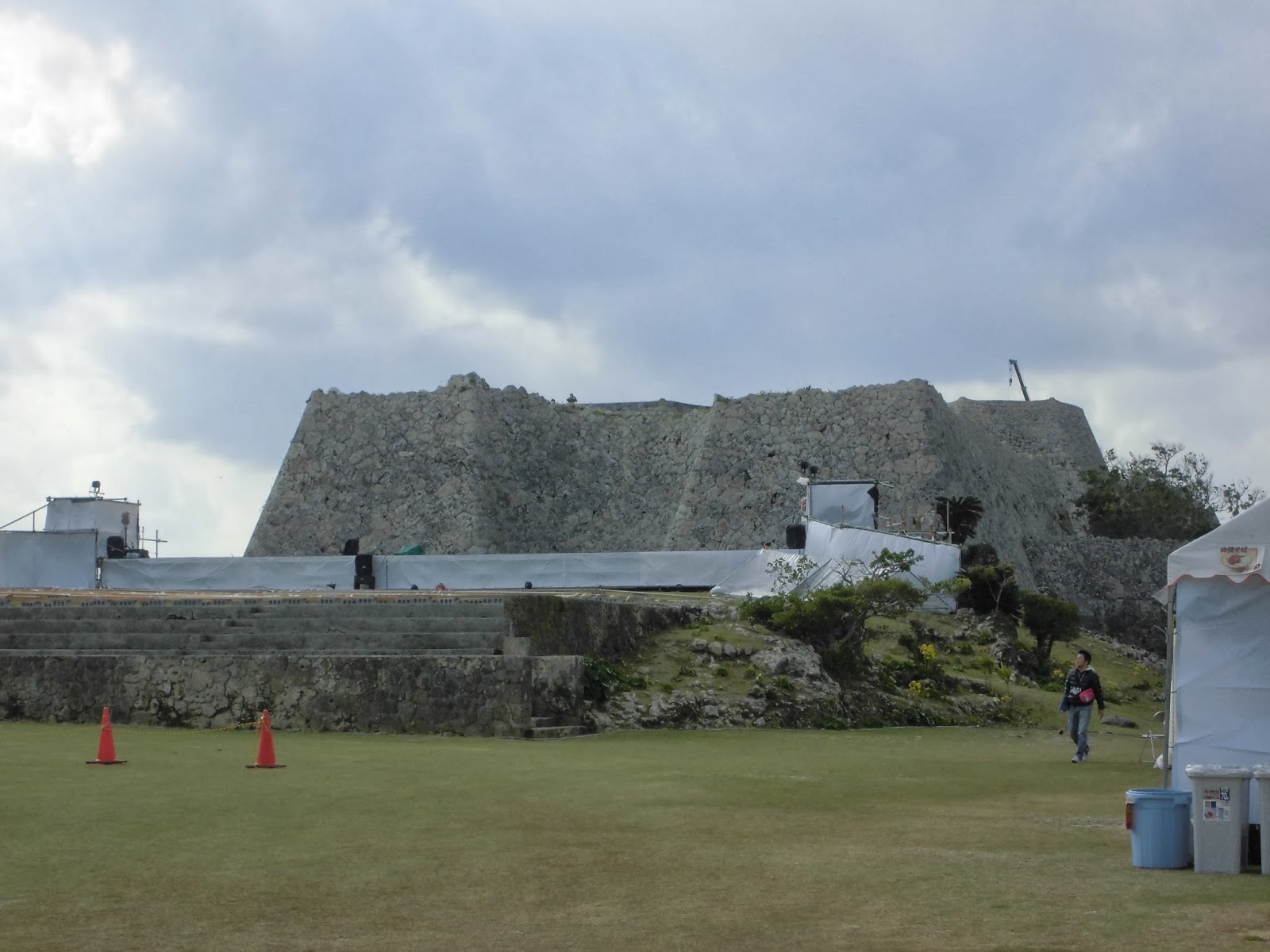
The only castle in Okinawa to still have any buildings is Shuri castle, the main castle of the Ryukyu Kingdom, and even that is a reconstruction.  Nakagusuku is no exception, and only the walls and foundations remain.  They were doing some event here when we came, so there were tents up in the big field in front of the castle.

この日は何かのイベントがあって、お城前の芝生にテントとかあった。
中城是一座美海軍的馬修培理來的。他去日本叫政府開國以前,去琉球叫琉球政府讓美國的船來琉球停船。當時日本有鎖國政策,所以除了一些例外以外,大部分外國船都不可以來日本。
Impressive stonework indeed!

中城はペリーが記録に残した場所としても有名だ。多くの人はペリーが江戸湾に入って来て、アメリカの船が日本に停泊したり、貿易したり出来る様にと幕府に無茶な命令をした人として知られているが、実は江戸に来る前に、ペリーは他に二カ所、現在日本領土になっているところに訪れた。(因みに、両方とも当時は日本じゃなかった)一つは意外な事に小笠原諸島だ。そこに西洋人とハワイ人が何人か住んでいて、ペリーはそこのリーダー格のアメリカ人にお金を渡して土地を買った。近海で活躍している米船を支援するために、そこに石炭倉庫を作るつもりだった。また、小笠原諸島に訪れる前にペリーは琉球に渡った。アメリカは日本に対して貿易したかったので、日本と直接出来なくても、琉球を通して出来るのではと考えていた。ペリーは首里城に侵入して、アメリカの要求を述べた後、沖縄のあちこちで調査を行った。(これはもちろん、相手国・琉球の反対を無視して行った)その間に中城にも訪問した。
Since he visited this castle, I'll mention a bit more about Admiral Perry.  When the US sent him to Japan to try to force the country to open up to American economic exploitation trade, he visited Ryukyu first because he was thinking of using it as an indirect means of accessing Japan.  Ryukyu at the time was a tributary state of China, but its international affairs were "secretly" (everyone knew) under the control of Satsuma, one of the Japanese domains at the time.  The American's were aware of this strange, multiple-soveirgnty arrangement, and they thought that if they could send trade through Ryukyu, it might not be necessary to deal directly with Japan.  At the time, Ryukyu was in fact one of the few places through which international trade with Japan (in this case, with China) was conducted, along with a couple of other places like Nagasaki (Dutch and Chinese trade) and Tsushima (Korean trade).  After departing Okinawa, Perry also visited the Bonin islands--now part of Japan, but at the time inhabited by a mix of westerners and Polynesians, some of whose descendants still live there--where he arranged with an American there who was the informal leader of the population to buy some of the land to serve as a coal storage area for American ships that passed through the area.  Lastly, he pulled into Edo Bay (modern Tokyo) and demanded that Japan open up its ports to American ships and trade.
Here we're looking down into the sunken area where the castle's well is.  It's inside the walls, so the castle was guaranteed a source of water even if besieged.
上の写真は井戸のある場所を見下ろしている。その下に降りてみたら、井戸の中に蟹が棲んでいた。

A crab living in the well.

在城堡裡有一口井。在裡面我看到一隻螃蟹。

Inside the walls is another open area.
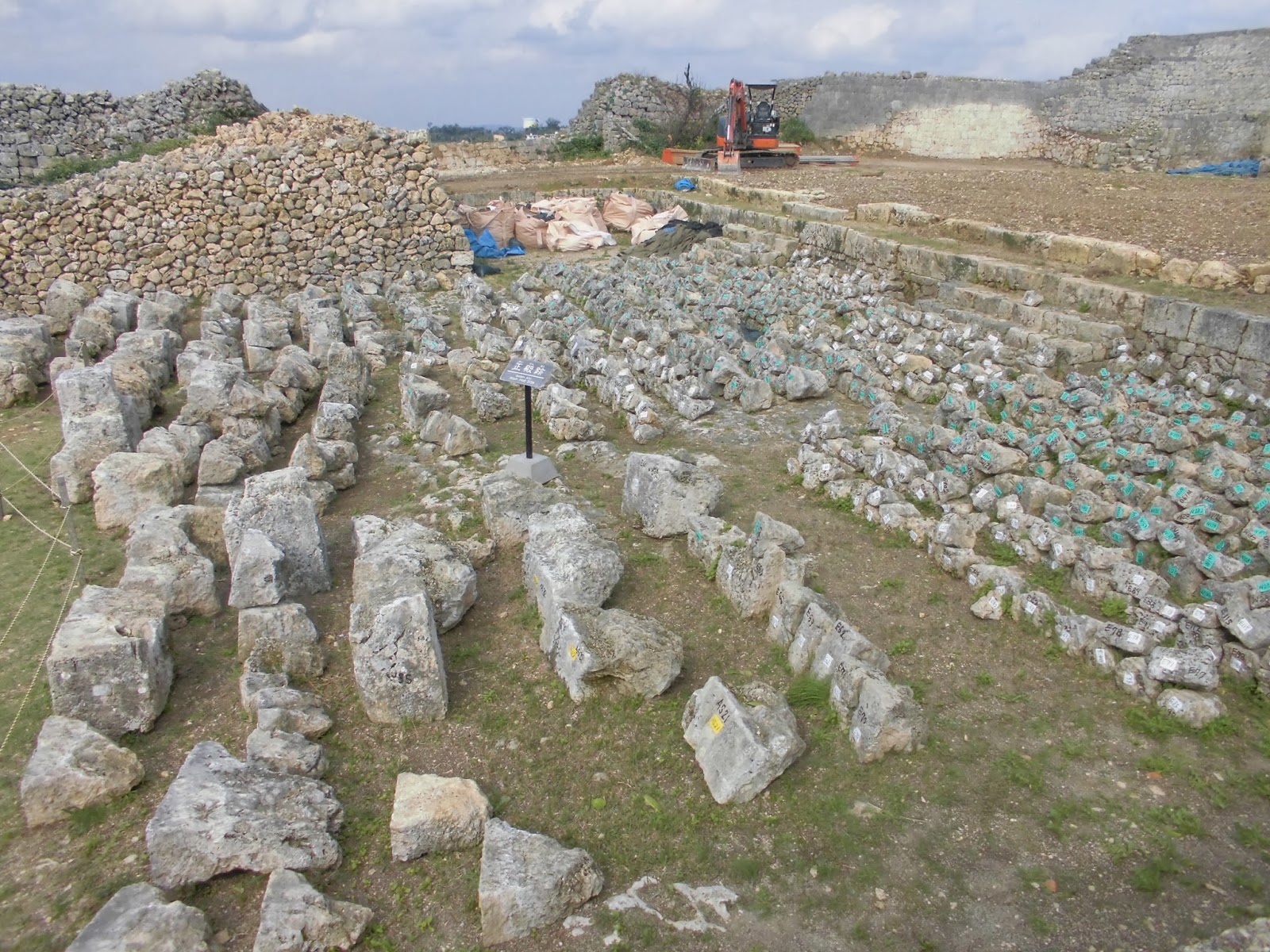
It wasn't like this last time I was here, but it looks like they are doing a major archeological excavation here.  All of these rocks are numbered and labeled.  The past two times I've come to Okinawa, I've been glad to see work like this going on at a couple of the castle sites I've visited, where previously there was nothing of the sort.  There's still a lot that's not 100% clear about the Ryukyu Kingdom's history, especially in the early period, and even more that's unknown about Okinawan history before the Ryukyu Kingdom was founded.

何かの調査を行っている様だ。これら全ての石に番号が付いていた。琉球王国の初期と建国前の時代について不明な点がまだたくさんあるので、これからの研究がうまくいけばと思う。

現在好像在研究。這些石頭上都有號碼。
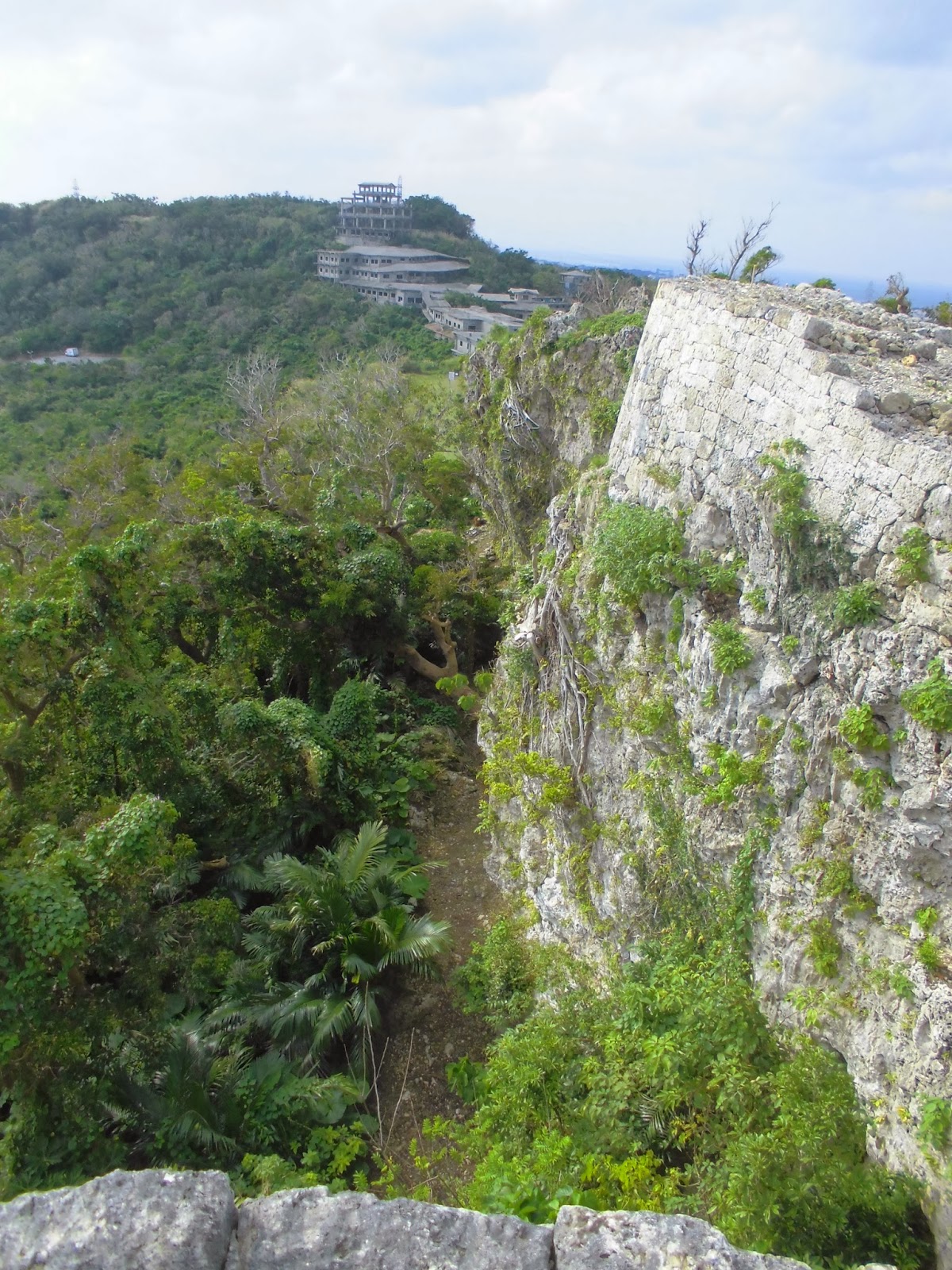
Behind the castle are the remains of a former hotel.

お城の後ろに廃墟になったホテルがある。
A sacred space on the castle grounds.

聖地だ。

一個聖地。

The back side of the castle, opposite where we entered.

お城の後ろ。

城堡後面。
And the entrance to the abandoned hotel.

これは先程述べた廃墟となったホテルだ。

在城堡後面被廢墟的酒店。
Another sacred spot.

これも聖地だ。
Here they were moving rocks into (back into?) the castle.

石をお城の中に運んでいる職人さんだ。(戻しているわけかな?)

在把石頭放在城堡裡面。
The guy here tied the rocks in place...
...and the crane lifted them up over the wall.

Behind the (brand new!) bathroom I saw this bird.

トイレの裏でこの可愛い鳥を見かけた。
我看到這隻小鳥在廁所後面。
*chirp* *chirp*
Amawari's Katsuren Castle is up next!

次:阿麻和利按司の勝連城!

下次我要介紹阿麻和利的城堡,勝連城!

Monday, January 6, 2014

Nakamura House/中村家住宅/中村的房子

During our second full day in Okinawa, we went north a bit to check out some castle ruins.  I had been to them before, but my partner in travel had not.  On the way to Nakagusukugusuku, we followed a sign into the Nakamura house.  Somehow, I had missed this place in all the times I had previously been to Okinawa.  What is the Nakamura house?  It's an amazingly well-preserved, traditional house.  The family who lived in it was definitely not poor, but they were not amazingly wealthy noblemen either, so this house gives you an idea of how average Okinawans lived back in the day.

在沖繩第三天,我們去看在中部的古跡。快要到一座(叫「中城」的古跡)我們看到一個看板告訴我們有一棟叫「中村家」的房子。這就是沖繩的傳統民家。在戰爭中,大部分的民家被爆炸破壞了,但是這一棟還在。

土曜日、沖縄にいる三日目、ちょっと中部辺りにグスクを見に行って来た。中城城に行っている途中、下の看板を見掛けて、急に行く事にした。沖縄はもう何回も行った事あるけど、この中村家住宅は今まで見落としてしまった。この住宅は沖縄に数少ない残っている伝統的な民家だ。戦争の被害を奇跡的に逃れて、今は博物館になっている。
The house is surrounded by a wall.

房子周邊都有牆。

まずは、回りに塀がある。

Here's the entrance...

進門去,,,

そしてここは入り口だ。
Upon going through the entrance, we're presented with another wall directly in front of us.  This is a feature of traditional Okinawan homes.  It's said to keep out bad spirits, but practically, it also provides more privacy.

還有另外一面牆。沖繩傳統的房子都有。是為了不讓鬼進來。

外の塀に入ってみたら、もう一つの塀がある。これは邪悪を除く為の塀だと言われている。また、実用的には外から家の中が見えない様にしているという役割もあるだろう。
On the roof is a Shisa, a guardian dog/lion that is seen all over Okinawa.

在屋頂有一隻ㄒㄧㄙㄚ。由來是跟金門的風獅爺或是中國的石獅子差不多。

屋根の上に凄いシーサーがいた。
The inner wall at the entrance is short, and we can go around it to the right or the left.

中の塀は短くて、右回っても左回っても入れる。

And here's the house itself.  The interior is very much like a traditional Japanese house.

房子裡面好像日本的一樣。

家自体は大和式とほぼ一緒だ。

A storage shed.

倉庫。

For some reason, there was also a display of stamps issued while Ryukyu was under American military control.

美軍統治時代的郵票。

家の歴史と全く関係ないけど、米軍統治時代の切手も展示されている。
A bird in the yard.

この鳥めっちゃ綺麗だ。よく沖縄で見掛ける。

This unfortunately blurry photo is of the family altar to the ancestors.  These altars are seen in Ryukyu and Japan, though I've heard that the Ryukyuan ones tend to be larger.

家裡的祭壇。是為了對先祖拜拜。

これは仏壇だ。基本的に大和の仏壇より琉球の仏壇の方が大きいと聞いた事ある。(詳しく知らないけど。)

A kimono.

沖繩的和服。(「琉服」嗎?)

琉球の着物。
Here's the underside of the roof.

屋頂下面

屋根の下はこうなっている。


食器などの名前を見るのも面白い。ウチナーグチと日本語の「似ているけど似ていない」ギャップは興味深い。個人的に、「やかん」の「ヤックヮン」は気に入った。
A shrine in the kitchen to the "Fi nu Kan", the god of the hearth.  Like in China, the god of the hearth is considered a very important god who is responsible for the well-being of the family.

在沖繩有一位神叫名「火的神」。祂好像灶神一樣。(可能原來就是一樣的神。琉球受到很多中國的影響。)

「ヒヌカン」は「火の神」という意味だ。昔はどの家庭でも必ず台所に小さな祭壇が置いてあって、現在も珍しくないと聞いた事ある。この間「竈神」(普通は左の字をその複雑な字じゃなくて、火偏+土と書くけど)の事を初めて知って、偉い沖縄の火ぬ神に似ているなぁと思った。もしかして同じ由来があるかも。竈神は中華世界にある神で、家庭一戸一戸の台所に拝まれている。
And here's the top of the roof.

In the back of the house, next to the toilet, we have the pig pens.

在房子後面也有廁所,也有豬的圍場。

家の裏には便所とその隣りに豚小屋がある。明治時代まだは日本人は基本的に肉を食べなかったと違って、琉球人は各家庭に豚小屋があって、豚肉料理を満喫した。
Pigs will eat anything, and the fact that the pig pens and toilet are next to each other is no coincidence.
Artsy shot.
...or maybe this angle is better?


A machine used in the processing of sugar.

為了把甘蔗做成糖的機器。

砂糖を作る為の何かの機械だ。
And we're back outside!

Conclusion: the Nakamura house is very cool.  Definitely go if you're in Okinawa.

中村家非常好!去沖繩就非去不可!

中村家住宅は本当にいい。沖縄に行けば、お勧めします!