先週愛媛に行って来た。「愛媛」と言えば、織田信長と名古屋のイメージが強いかもしれないけど、それは単にお前は地理の勉強不足してるからだ!愛知じゃねぇよ。愛媛だ!坊ちゃんさぁ、ポンジュースさぁ。知っとけ。
いやぁ、でも本当に愛媛を愛知と勘違いする人が多いと聞いた。なんか、愛媛はあまりイメージが無いって問題だろう。でも俺はPR問題に過ぎないと思う。愛媛には実際に面白い見所がいっぱい有る。因みに、泊まったところは松山市の隣りに有る東温市だ。
上禮拜我去愛媛。(在日本的四國)四國是日本四個大島中間、最小的。因為比較鄉下的地方、所以不太有名。但是我去了之後就知道還有蠻多好好的玩。
My longtime friend, Roger Rabbit, invited me to visit him, so last week I made a short trip to Toon City. (Formerly Toon Town, it was incorporated as a city in 2005.)
Ha ha. How droll.
"Who Framed Roger Rabbit?" jokes aside, "Toon City" is the official romanization of the city name. Pretty neat, huh? It's actually pronounced something more like "Toe Own" though. So where is this Toon City? It's in Ehime!
In Shikoku.
...Still doesn't ring a bell?
Well, I can't entirely blame you. Shikoku is the smallest of Japan's four main islands, and it doesn't get a whole lot of press when compared to places like Tokyo. Here's a map I grabbed off of Wikipedia that's in German:
這是四國的地圖。我住在東溫市(Toon)。它在這張地圖、在Matsuyama旁邊(東方)、所以找到了Matsuyama就找到東溫市差不多了。對了、你知不知道Matsuyama是甚麼漢字?是「松山」。然後松山市也有機場、所以也在日本、也在臺灣、有「松山機場」!我聽說從這年十月開始松山--松山的直飛。
我先塔長榮航空的Hello Kitty飛機去福岡。後來坐船從小倉到松山。
The map also shows the 88 temples in the Shikoku pilgrimage trail, but I'll talk more about that later. The place I stayed, Toon City, is on the map, just to the east of "Matsuyama" and inland a little bit. (Look on the north-western part of the map.)
So how did I get there? By Hello Kitty Jet, of course!
桃園空港から出発して、キティージェットで福岡に飛んで行った。中身も全てはキティーに成っているので、キティーのファンからすれば最高の飛行機だけど、そうでもない俺からすれば、なんかの変な宗教の教会にうっかり入ってしまった気がした。
EVA Air, a Taiwanese company, flies these between Taiwan and Japan. The entire interior, the pillows, the headrest covers, the lunches, everything is covered in Hello Kitty. I recommend nausea medicine even if you are not one normally prone to air-sickness.
However, the jet only took me as far as Fukuoka. From there I hopped on a ferry and rode through the night to Matsuyama.
福岡に着いたら、小倉に行って、北九州と松山を結ぶフェリーに乗った。
It was a really nice ride. We started on the east side of Fukuoka, facing the Seto Inland Sea, so the entire trip was on that sea. If you look a map of all of Japan, or even the one I posted above, you can see that the Seto Inland Sea is almost entirely cut off from the ocean except for three thin channels. As a result, even though it's a sea, it feels like a lake. It's very calm, and you are in pretty much no danger of getting sea sick.
坐船很好玩!因為我們通過瀨戶內海、所以波浪都沒有得很舒服。你看地圖就知道、瀨戶內海可是內海的典型。只有三個很窄的海峽跟外海聯絡。好像大大的湖泊。
瀬戸内海を運行したお陰で、全然波は無くて、気持ちよく乗れた。流石、瀬戸内海は名前通り、ほとんど陸地に囲まれて、全く荒っぽくない。
There wasn't a whole lot going on out there except for this ferris wheel. I wish my camera could take clearer photos at night, but on the other hand, I also kind of like the weird light squiggles I get when I take night photos.
フェリーの共同寝室。夏の土曜日なのに、乗船客はめっちゃ少なかった。フェリーはバスと違って、完全に横に成れるから、よく寝れる。また、エネルギーを省く事で頑張っている日本だからこそ、政府にフェリーをもっと支えたり、勧めたりして貰いたい。
我們睡在這裡。乘船客很少得讓我擔心船舶公司的利益。跟別的國家一樣、20世紀的日本做很多道路、然而有車的人越來越多了。還有因為道路很多、客運也很便宜。可是說環境問題的方面、船舶比客運好多了。我希望日本政府不讓船舶沒有了。
Our sleeping quarters. There are private rooms as well. The boat was disturbingly empty even though it was a weekend and still kind of the summer season. Boats are a very energy efficient (and fun!) way to travel, so I hope that the Japanese government will support these ferry services so that they don't die out. Of course, unlike building yet more highways through the mountains, supporting ferries doesn't involve pouring any concrete, an activity Japanese politicians love to throw money at, so I'm not holding my breath that they'll help the ferries out.
And here's the terminal in Matsuyama! (below)
松山に朝早く到着した。下はフェリーターミナル。
到了松山!
なぜか、片仮名英語名にされた「フィッシングセンター」
てっちゃん撤退したかな。開いてなさそうだ。まあ、まだ8時にも成ってないけど。
I took a train from here to Toon City. This is not a JR line. (JR = former national railway of Japan) It's a separate line, the Iyo Line, owned by a conglomerate that owns department stores and all sorts of stuff around Ehime.
這裡坐「伊予鐵路」的火車。「伊予」是愛媛以前的地名。(江戶時代)這條伊予鐵路從松山到東溫走。
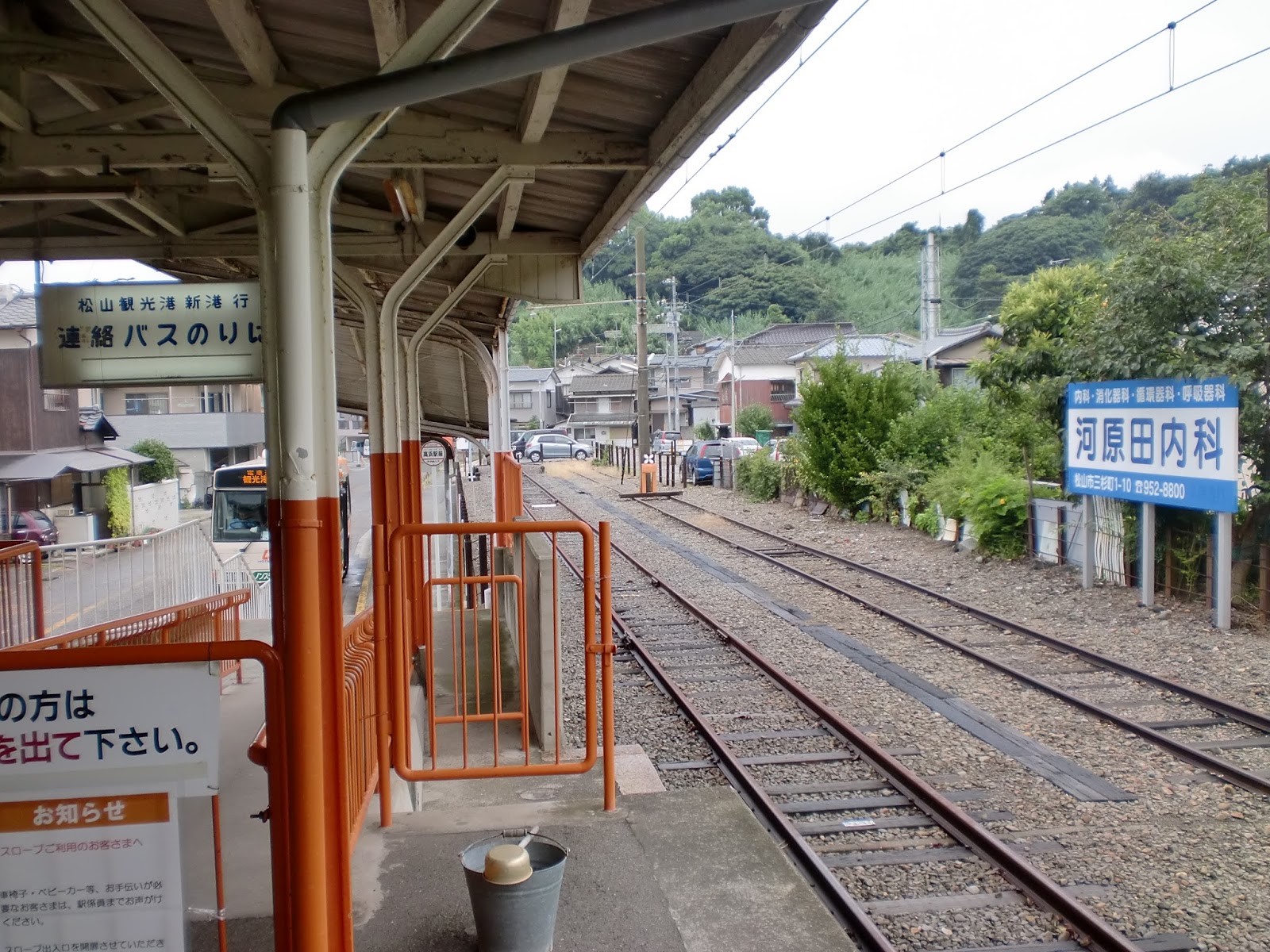
ここから伊予鉄に乗って東温市に行った。駅舎は凄くレトローで格好いい。
The station is very retro.
The name poster inside the station is a prop from when it was used for shooting some TV show or something.
この駅舎は何かのドラマ(?)に使われたので、中にドラマに出場する駅名が書いている看板が有った。
For some reason, a 1960's-era Greyhound bus pulled up to the train platform.
電車の外見は古いけど、中に入ってみたら、普通に今頃の電車だ。
Riding on the Iyo Railway!
伊予鐵路的火車前面有很大的窗、所以看得清楚。
Levers! Knobs! Measurement devices!
The view from the front of the train was really good. There was a big window separating us from the driver, but because it was so big, we could still see clearly out the front. NYC MTA, take note of this when you order new trains. Thank you.
下の写真には松山市内の路面電車が有る。この駅で路面電車と伊予鉄が合流して、乗り換えが出来る。調べてみたら、日本にはまだ路面電車が沢山有る様だが、20世紀の前半と比べたら大分減って来た。路面電車と言う技術は船と同じく、省エネルギーからすれば古し良し技術だ。もっと復活させて欲しい。
At this station the trolley lines in Matsuyama meet up with the Iyo Train line which we're riding on to get to Toon City. Matsuyama is one of the many cities in Japan that has trolleys. I say "many" even though in the early 20th century there were way more. Like many countries, Japan tore up a lot of their trolley lines in the mid-20th century, but compared to my home country, the US, Japan still has quite a lot of trolley lines.
上面是路面電車。松山市也是一個有電車的城市。
前方にこんなに大きな窓が有ったお陰で、良く見えた。
And here we are at the last stop at the other end!
到了!
到着!終点。
Another retro station.
この駅舎も雰囲気がいい。
自動販売機の上に「たばこ」の看板が見えるだろう?塞がった窓がそこに有った。以前は小さな駅内の店が有っただろう。
火車站看起來跟以前的一樣。也有繁體字的看板!(到了戰爭結束了之後、日本還用繁體字。現在日本的「驛」寫「馬+尺」。)
I'm getting old, and my memory fails me, but for some reason we went back into Matsuyama by car immediately after arriving at Toon City. I think. It may have been the next morning though. At any rate, here are some photos of Matsuyama from inside a car.
下の写真は同じ日か、次の朝か、どっちか覚えてない。兎に角、車でもう一回松山に行ってみた。
這些照片是松山市內的。我們到了東溫市、後來坐車再去松山。
That's it for now, but there's still lots more to come!