We had a three-day weekend here in Taiwan this past weekend because of the
Moon Festival. I took the opportunity to visit a friend in Taipei. On our first day in Taipei, we went to Wulai. Wulai is a small Atayal town near Taipei. (The Atayal are one of the aboriginal people of Taiwan.) The town is up in the mountains, and it has a number of hot springs.
この前の週末はお月見だったので、三日間の連休があった。台湾の方が日本よりお月見がにぎやかで、休みにもなる。私は台北の友達のところに泊まって、台北辺りで観光して来た。一日目は「烏来」(ウーライ)というタイヤル族の村に遊びに行った。タイヤル族は台湾の先住民の一つだ。烏来の見所といえば、台北からのアクセスがいいし、温泉があるということだ。
上個週末,我利用中秋節的假去臺北住朋友的家。第一天我們去烏來。
This steam train was set up outside of Taipei Station.
台北駅の前にこの汽車が展示されていた。
在臺北站前看到這台蒸汽機車。
I took some photos of Taipei--mostly from inside the bus--while we were going to Wulai.
烏来に行っている途中写真を撮った。
從臺北到烏來搭公車。坐車時我拍一拍照。
And here we are at Wulai! This river goes right through the town.
烏来に着いた!村の中に川が流れている。
烏來到了!
This half-dead moth was hanging around on the town's main street.
繁華街に死にかけている蛾がいた。
在繁華街我看到這隻半死的飛蛾。
There were a lot of people hanging out by the river. Not only were they swimming, but a lot of them were having picnics and barbecuing as well. People usually hold barbecues with their family and friends during the moon festival in Taiwan.
台湾ではお月見に家族や友達と一緒に外で焼き肉したりすることが普通だ。烏来にも人が川辺で集まって、泳いだり食べたりしていた。
中秋節的關係在河邊人很多。
Wulai used to be a town that loggers would all pass through on their way up into the mountains to gather timber. During the Japanese period, motorized trolleys were set up to haul wood down from the mountains. These trolleys are now a kitschy tourist attraction. (But really noisy and bumpy and fun too!)
昔、烏来は伐採の町だった。日本統治時代に自動式のトロッコ列車が出来て、今はそのトロッコは観光資産になっている。乗ってみたら遊園地の乗り物みたいな感じでガタガタして、急カーブやトンネルなど通って行くので、めっちゃ面白い。
因為烏來以前是伐木的村落所以日時代為了把樹搬下山做小型火車。現在變成觀光火車。
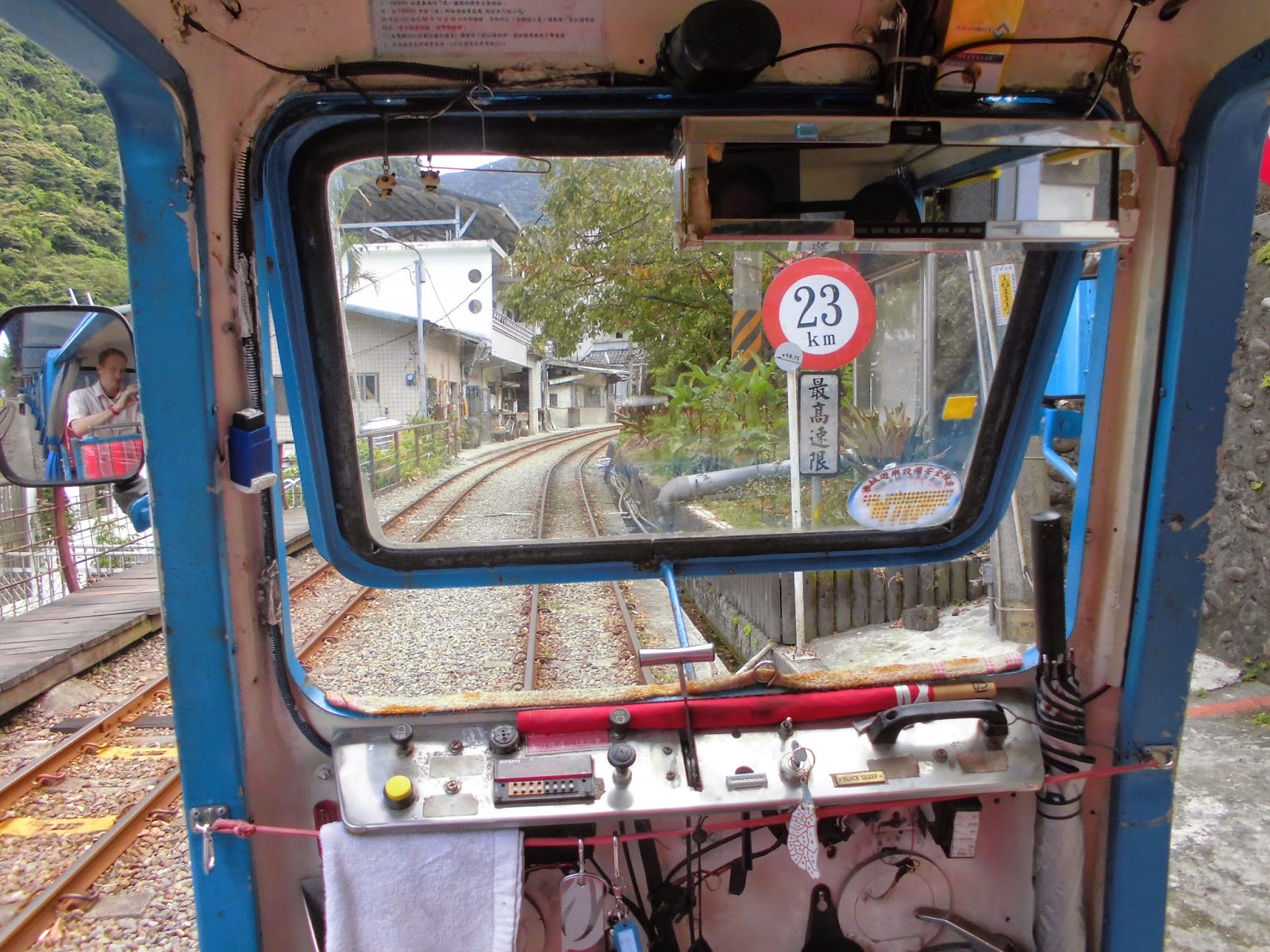
I wonder what the disposable razor next to the keys is for?
鍵の隣りになんで使い捨ての髭剃りあるかな?
我注意到鑰匙旁邊的刮鬍刀覺得很不可思議。
The speed limit for the trolleys is set at 23 km/h for some reason.
At the other end of the trolley is a huge waterfall. It's about 260 feet tall.
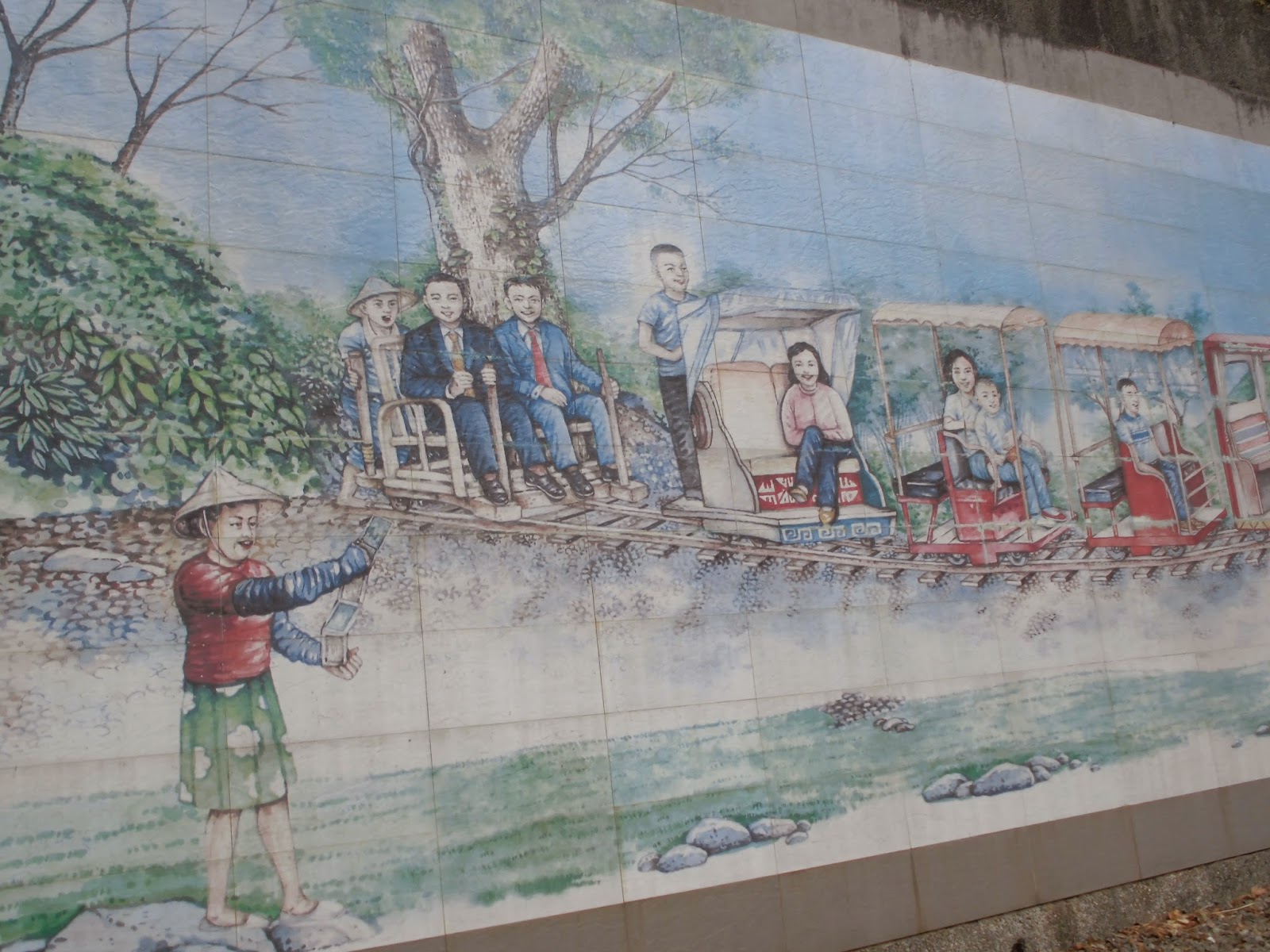
This painting reminds me of a Mao-era communist propaganda poster. Is there a name for this art-style? Chinese-20th-Century-Creepy-Happy-Face-ism?
不自然的微笑。
Right at the end of the trolley line on the way up you go through this little tunnel. Really, the whole ride is like an amusement park ride.
上がっている時には最後にこのトンネルを通る。
火車上山時最後通過坑道。這條火車坐得像遊樂園一樣很好玩!
降りてからこの滝を見に行った。80メートルもあるらしい。
瀑布差不多八十公尺高。
Huge taro leaves
タロイモ
芋頭
The same river as before, but upstream aways.
これは先の川の遡ったところだ。
The buildings here are basically the same style of buildings you'll see anywhere else in Taiwan, but they went and attached these wood slats to the facades. It's a cheap--but I think--surprisingly effective way of making the town look a little nicer. A town with a unified architectural style (or at least a town that's faking it) looks so much nicer than a town where every building looks like it was built with no regards to what was around it.
村の建物自体は台湾のどこにでも見かける様なものだけど、表面に木材の飾りを付けただけで大分綺麗になったと思う。基本的にどの村でも建物の雰囲気を統一させたら、いい感じになる。こういう割と安いやり方でもだいぶ効果がある。
因為房子門面都有一樣的樣子,看起來漂亮。其實建築只是台灣很普邊的,到處這樣的房子看得到。可是只要把門面裝飾,氣氛就不一樣了。
taro umbrella
トトロを思い出す。
龍貓的雨傘
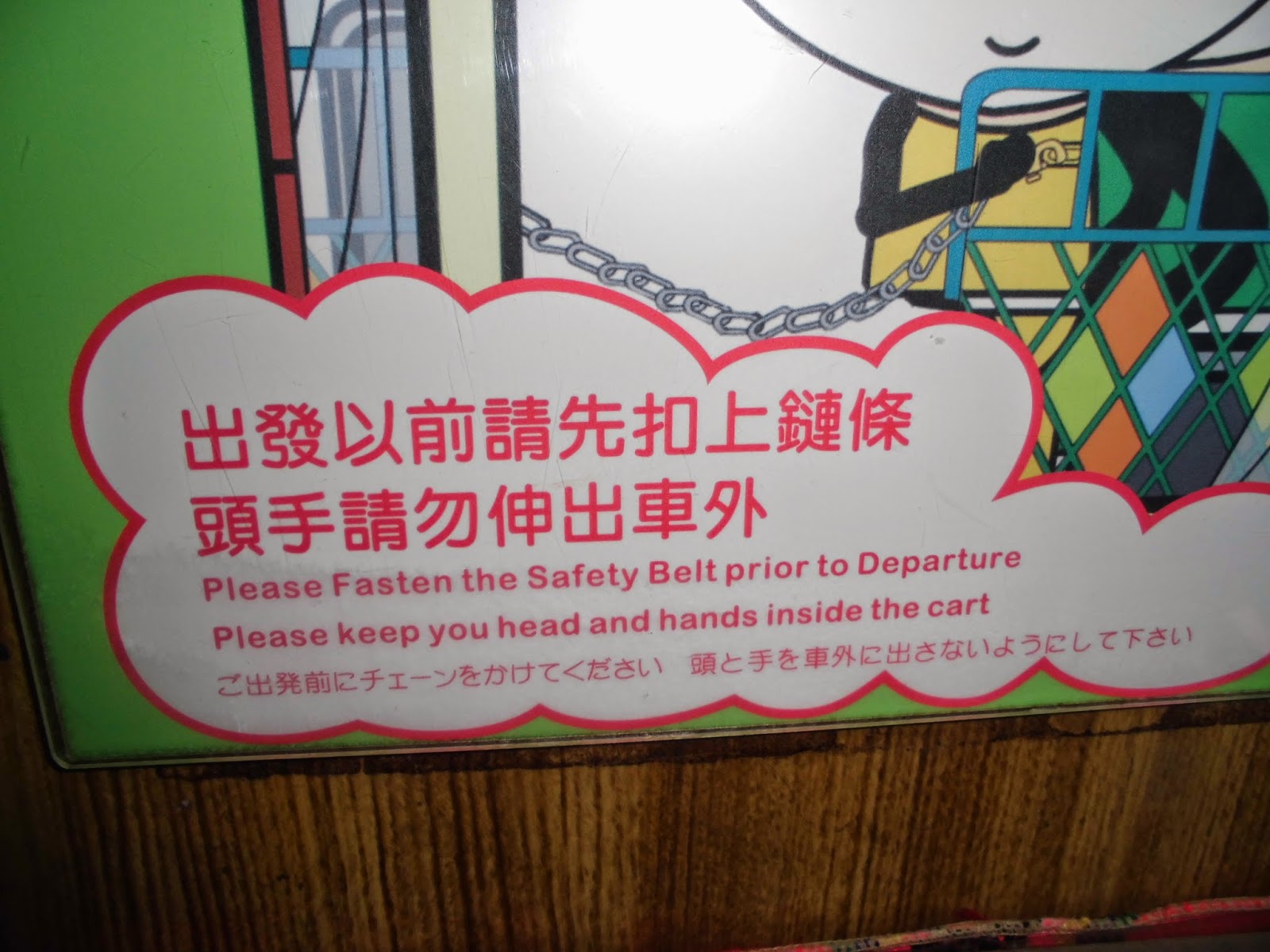
It's funny because there were no seat belts.
鏈條沒啦!
Papayas?
パパイヤかなと思う。
木瓜吧?
I didn't take any photos because I didn't want to seem like a pervert, but the best part of Wulai was the outdoor (free!!!!) riverside hot spring. The water pours right into the river, so if you move around just a little, you go from ice-cold river water to boiling-hot spring water. While I don't have any pictures of the hot spring area, I do at least have this photo of a cute dog who is waiting for his owner to finish bathing.
烏来の一番いいところは川辺の温泉。水着姿の人が集まっているので、この犬以外の写真は撮らなかった。温泉のお湯が川に注がれるので、場所をちょっとだけ移ったら、冷水からお湯に替わる。しかも谷に入っている川からの景色もいい。無料だから是非入ってみて!
烏來最好的地方是河邊溫泉。風景漂亮,也是免費的!因為溫泉水流進河裡去,所以只要移動一點水溫就不一樣了。因為大家都穿泳衣,所以我沒拍照。只有這一片在等主人的狗的。
Woof! Woof! See you next time!
次回、台北と慈湖に行ってみよう!
下次我們要去慈湖。